Louisiana's Own
Long before the Catahoula Leopard Dog became the official state dog of Louisiana in 1979, it had already put in centuries of work. Named after Catahoula Parish — the name comes from a Choctaw word meaning "sacred lake" — these dogs weren't bred for ribbons or recognition. They were bred to work. To hunt. To guard. To survive.
The Catahoula isn't purely European or entirely Native American. It's a dog that belongs to this country alone — stitched together from continents and cultures, then hardened by the Louisiana swamps.
Three Threads, One Dog
The Catahoula Leopard Dog came together from three distinct bloodlines
Spanish War Dogs
De Soto's expedition brought Mastiffs and Greyhounds — built for hunting and protection. Some never made it back. Those that stayed behind became part of the foundation.
Native Dogs
Dogs that had lived alongside tribes for thousands of years. Hardy. Adapted. Already woven into the rhythm of the land long before the first Europeans arrived.
French Beaucerons
French settlers arrived with their herding stock, particularly the Beauceron. They brought the merle coat and the drive to move livestock across rough ground.
Finally Recognized
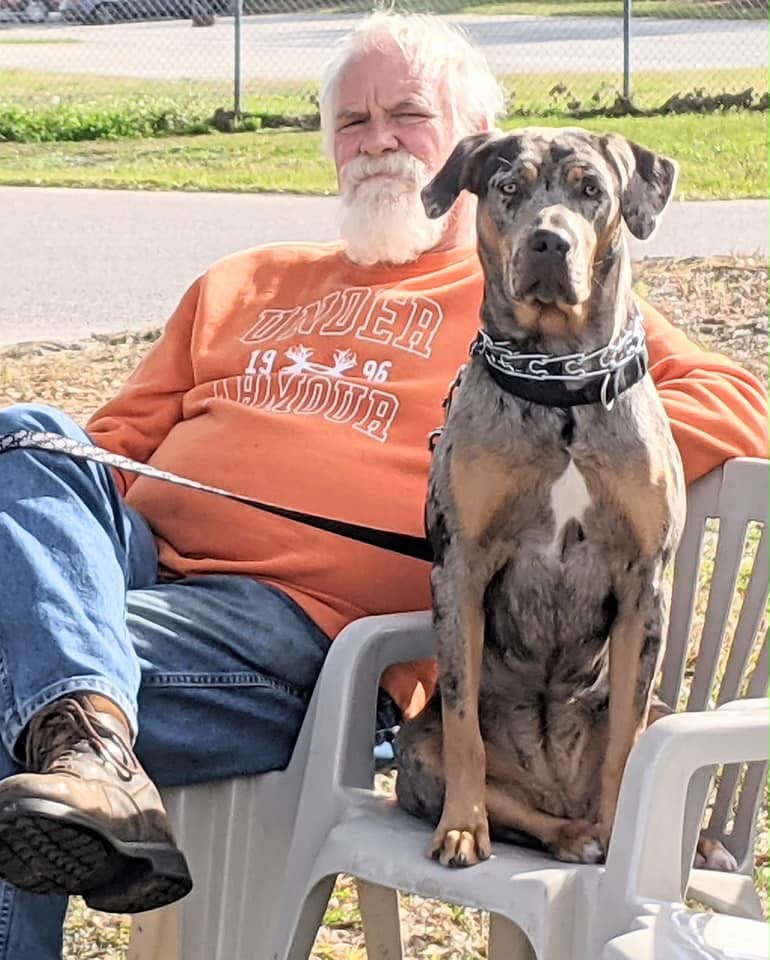
In 1979, Governor Edwin Edwards signed the bill making the Catahoula Leopard Dog the State Dog of Louisiana. It was a formality, really — the breed had been doing the real work for over 400 years. But the designation mattered. It said, out loud, what everyone in the backcountry already knew: this dog is ours.
Built by Work
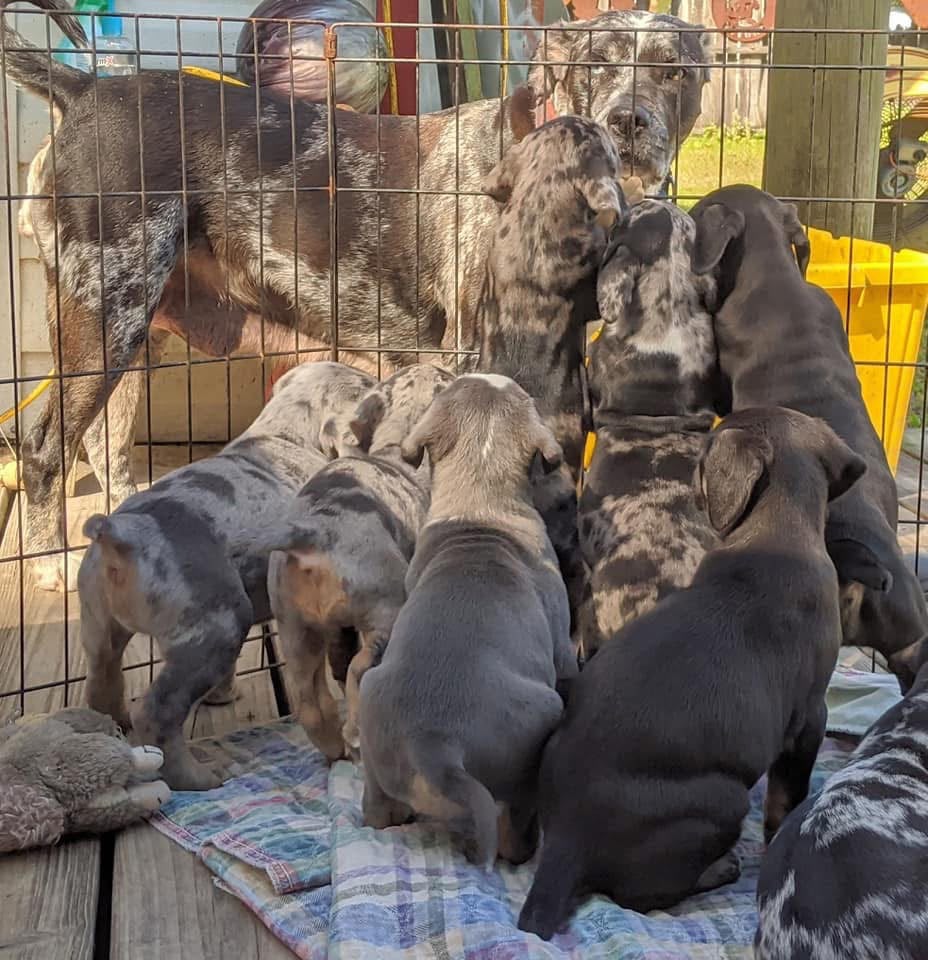
Nobody sat down with a breed standard and a sketchpad. The Catahoula was shaped by what it could do, not how it looked. Early settlers needed dogs that could bay a feral hog, push stubborn cattle through marshland, and sleep on the porch with one eye open. Uniform coats and matching ears weren't the priority. Capability was. That's why the breed still carries an independence and intelligence you don't find in dogs bred for the show ring.
The Catahoula Right Now
From Louisiana swamps to living rooms across the country, the Catahoula has adapted without losing itself. The same drive and intelligence that made them indispensable on the frontier now shows up in:
- Working cattle on real ranches
- Hunting and tracking in tough terrain
- Agility, obedience, and dog sports
- Search and rescue operations
- Therapy and service work
- Being a steady, loyal family dog
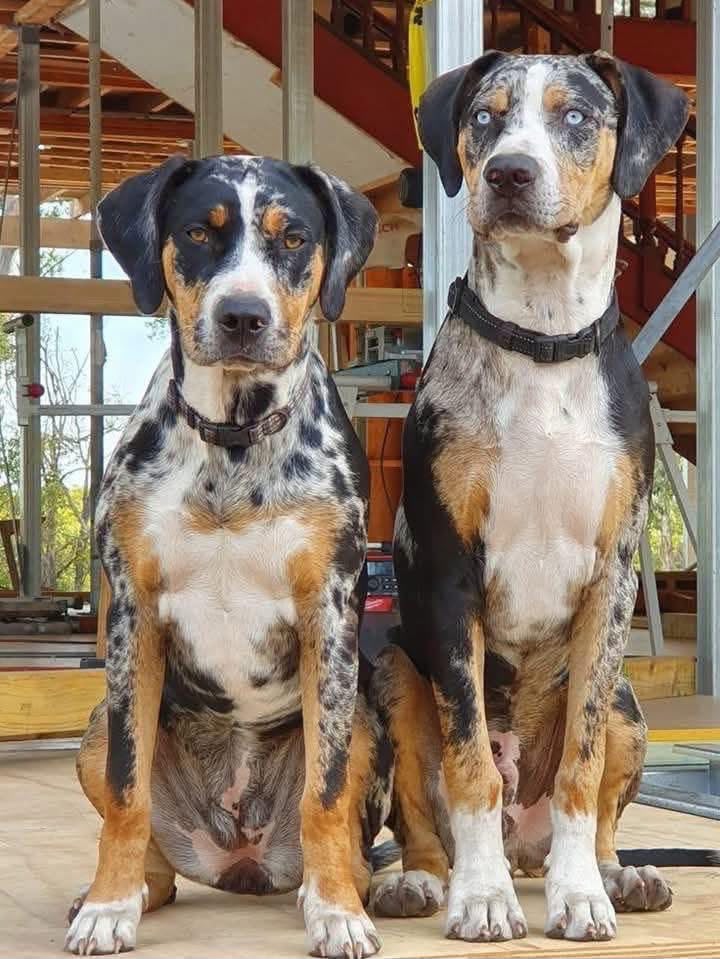
Those coats and glass eyes aren't decoration. They're a record of where this dog came from — and what it was built for.